
Chaldean Heritage Committee
The Chaldean Church faces challenges both within and outside its borders following the destruction of numerous churches and monasteries, the displacement of its members, and the decline of Chaldean cultural heritage, including language, arts, archival records, libraries, educational centers, and many documents. Furthermore, the modern history of many dioceses remains undocumented. Therefore, the Chaldean Synod, meeting in Rome from October 16-19, decided to establish the Chaldean Heritage Committee as one of several committees to address these contemporary challenges and work together in a spirit of shared responsibility and service to contribute to the Church’s mission.
The aforementioned committee aims to record, preserve, and promote our heritage in general, ensuring its presence in our lives to safeguard Chaldean identity spiritually, culturally, and socially. It also aims to present this heritage to the new generation, recognizing that heritage is a living memory that strengthens faith through comprehensive work.
Areas of Focus:
1 Chaldean Language
2 Chaldean Melodies and Singers
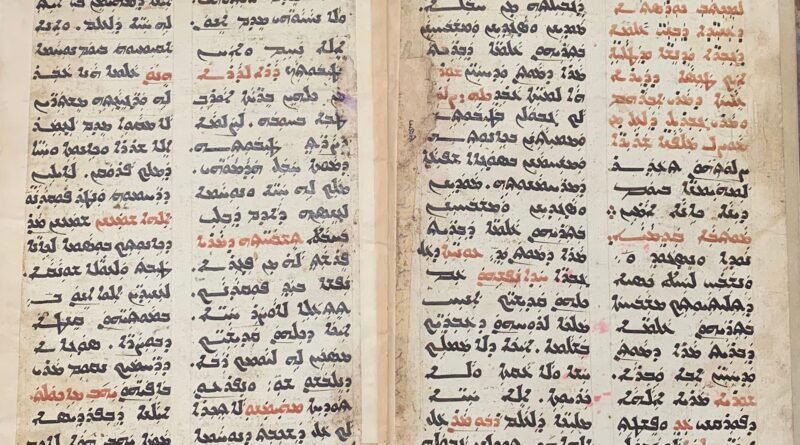
3 Manuscripts Inside and Outside Iraq
4 Archaeological Archives Inside and Outside Iraq
5 Chaldean Arts (Artists and their Contributions in Theater, Cinema, Painting, Sculpture, and Other Fields)
6 Libraries, particularly those related to the history of the dioceses
7 Architecture: Churches, Monasteries, Halls, Houses, and Cemeteries
8 Journals
9 Museums
10 Furniture
11 Consecrated Persons
12 Martyrs of the Church and Testimonies of its Members
13 Historical Documents: History of Each Community, Correspondence, Photographs, etc.
Anyone who has material to archive, preserve, write, or provide guidance on the above topics is kindly requested to send it to us or contact us as a first step. We will initially hire a staff member to begin work until the committee members and its activities are announced.
These contributors will embody, through their collective work, the principle of partnership in a synodal spirit to serve the Church’s mission in the world.
Thanks, and appreciation to all who have worked and continue working toward this goal in our cultural centers, museums, and libraries over the past decades.
+AB Habib Hermiz Jajou